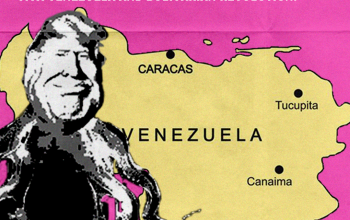
The Cuban people are currently struggling with an energy crisis due to the oil embargo by the US since last January. This policy was implemented after the kidnapping of Venezuelan President Nicolas Maduro and his wife, Cilia Flores, through an early morning military operation in Caracas by elite Delta Force troops on January 3 on charges of drug trafficking and weapons violations – accusations that Maduro has denied.
Cuba relies heavily on oil imports because its domestic production capacity is not yet able to meet its enormous national energy needs. Cuba’s oil production is only around 40,000 barrels per day, while daily needs reach up to 90,000 to 110,000 barrels. Therefore, the US embargo makes it increasingly difficult to access oil imports and worsens the energy crisis in the country.
To meet national oil needs, Cuba has been dependent on Venezuela and Mexico as the two main supply countries. After Maduro’s kidnapping however, oil supplies from Venezuela were stopped. This situation is exacerbated by the threat of import tariffs and blocking oil flows from the US to Cuba’s supplier countries. Mexico, which is the main supplier contributing 44 percent of total imports in December 2025 – more than Venezuela which accounts for 33 percent – has also stopped supplies to Havana. Mexican President Claudia Sheinbaum however stated that the suspension was not due to pressure from Washington. The cessation of supplies from Venezuela and Mexico has worsened the energy crisis in Cuba and forced the country to depend on help from other parties.
Cuba is now relying on emergency aid supplies, one of which is from Russia. This happened after the US relaxed the oil blockade last March, so that a Russian tanker carrying around 100,000 tons (equivalent to 730,000 barrels) of oil could dock in Cuba at the end of that month. The American decision was seen as an effort to avoid direct confrontation with Russia at this time. The energy crisis in Cuba is actually inseparable from the long history of the 64-year US economic embargo since Proclamation 3447 was issued by John F. Kennedy in 1962. This policy prohibits almost all import and export activities between the two countries in order to isolate the Cuban economy under the leadership of Fidel Castro after the 1959 Cuban Revolution, as well as stop the spread of communism in the Latin American region.
The increasingly severe energy crisis has resulted in continuous national power outages. Many power plants have stopped operating due to lack of fuel, so power outages often occur for up to 22 hours per day. The Cuban government has attempted to negotiate new energy supplies with a number of countries, but these steps have been hampered by the international geopolitical situation that has worsened global energy distribution. The conflict in the Middle East triggered by the war between Iran and the US and Israel, as well as the blockade of the Strait of Hormuz, has also disrupted global oil supplies to international markets, including Cuba. As a result, around 65 percent of Cuba is now experiencing electricity blackouts simultaneously due to the decline in national energy production capacity.
In a number of areas, community activities are completely paralysed because electricity is available for a very limited time. Public facilities, economic activities and educational services have also been disrupted. In eastern Cuba, total darkness was reported throughout Thursday May 14, before electricity gradually returned. This situation shows the fragility of Cuba’s electricity system due to limited fuel. Amid a tight US blockade, Cuba’s national oil reserves have reportedly been depleted. After supplies from Russian tankers ran out, Cuba’s electricity grid now relies solely on domestic oil, natural gas and renewable energy.
Although Cuba has installed 1,300 megawatts of solar power over the last two years, grid instability and battery limitations mean that electricity supply is not optimal, especially at night. As a result, blackouts spread across the country and remaining fuel has been prioritised for hospitals and other essential services. Electricity for the general public is only available for around 30 to 90 minutes per day. In that short time, residents rush to cook and complete household chores. If they don’t have time, they are forced to cook using charcoal or wood, and often sleep outside at night because of the hot weather. The energy crisis in Cuba must be seen as part of the hegemonic relationship of US imperialism to maintain the stability of international capital.
The US embargo is a tool to pressure and discipline countries that do not want to submit to Washington’s will. These restrictions on oil access have had a serious impact on the Cuban working class. This situation reflects the contradictions of imperialism, where powerful countries use political-economic domination to control the social life of other countries. This fact was emphasised by US President Donald Trump’s statement which ambitiously stated his intention to openly control and take over Cuba.
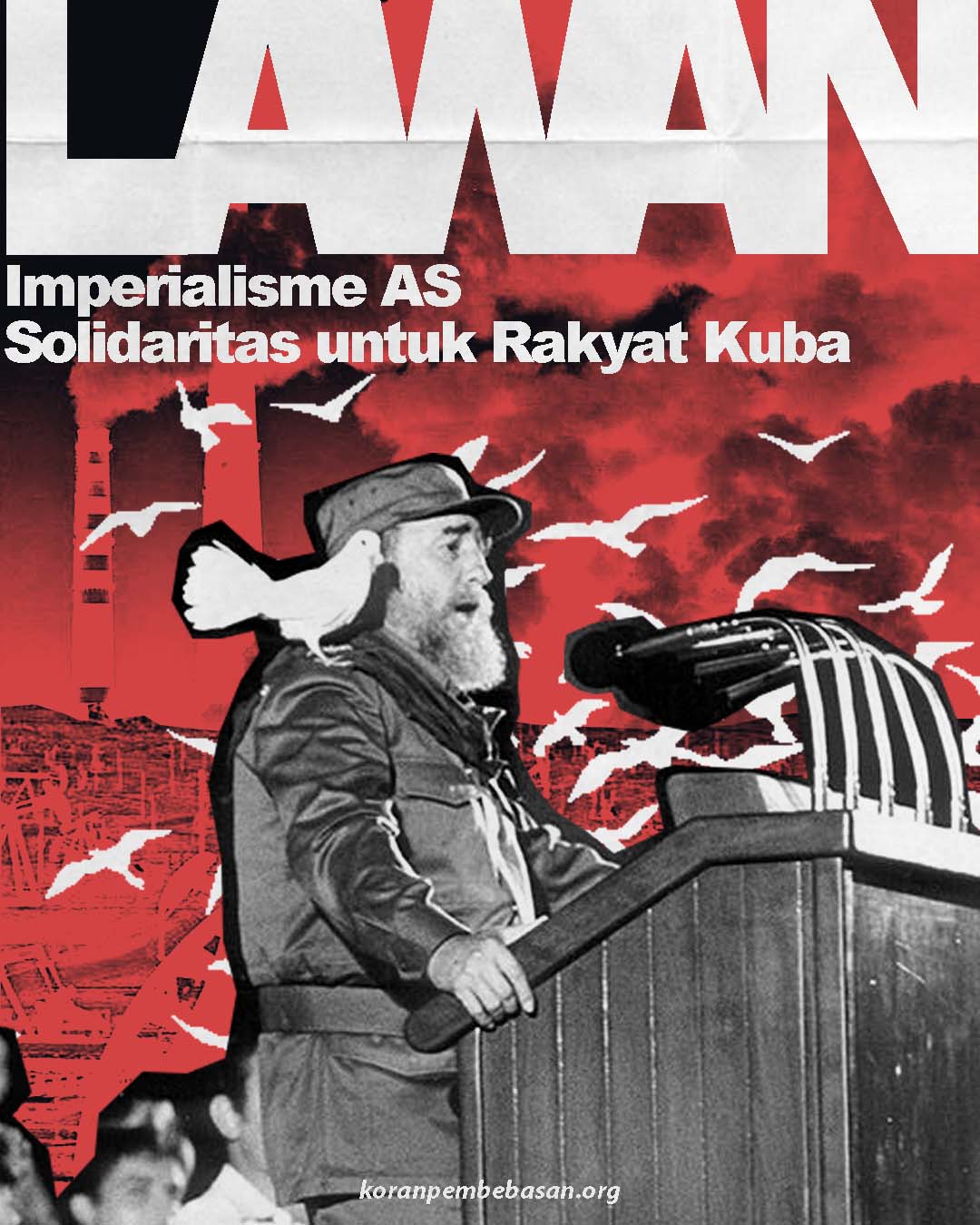
Therefore, we declare our full solidarity with the Cuban people who are currently facing a prolonged energy crisis due to the economic blockade and unilateral US embargo. This crisis has caused fuel shortages, mass power outages, bottlenecks in public services and worsening people’s living conditions. We view the economic embargo and energy blockade against Cuba as forms of political pressure that not only attacks the country’s economic structure, but also take away the basic rights of the Cuban people.
US policy reflects the practice of political and economic domination of superpowers over nations that choose different political paths. For more than 60 years, Cuba has been forced to live under pressure aimed at undermining its national sovereignty. This kind of policy is contrary to principles of the right to self-determination and respect between nations. We oppose the use of economic embargoes, energy blockades and unilateral sanctions as political tools, because in practice, it is also the working class and poor groups who suffer the most. Therefore, we call for:
- An end to the US embargo on Cuba as a form of imperialist economic aggression!
- Respect for Cuba’s sovereignty as an independent country!
- International solidarity with the Cuban people in the face of the energy and humanitarian crisis!
- A rejection of all forms of political, economic or military intervention against Cuba!
- Building and supporting international cooperation that is fair and free from imperialist pressure!
- An end to intimidating sanctions against countries that supply energy to Havana!
- The removal of Cuba’s status from the list of State Sponsors of Terrorism (SSOT)!
- The opening of the maritime blockade to send humanitarian logistical aid to Cuba!
Through this statement, we emphasise our support for the Cuban people and the working people of the world. The sovereignty and right to self-determination of the Cuban people and their struggle to choose their political path are principles that must be respected! Solidarity with the Cuban People and Revolution!
Jakarta, May 23, 2026
People’s Liberation Party (Partai Pembebasan Rakyat, PPR)
koranpembebasan.org
[Translated by James Balowski. The original title of the article was “Lawan Imperialisme AS, Solidaritas untuk Rakyat Kuba!”.]
https://www.indoleft.org/statements/2026-05-24/resist-us-imperialism-solidarity-with-the-cuban-people.html